Hamburger Font: A Feast for Your Designs
Let's be honest. Most fonts are designed to be invisible. They're the quiet workhorses of typography, meant to deliver a message without drawing attention to themselves. But sometimes, a project doesn't need a whisper. It needs a shout. It needs a playful, bold, and utterly unique statement. That's where a creative font like Hamburger enters the scene, and it’s a game-changer for the right project.
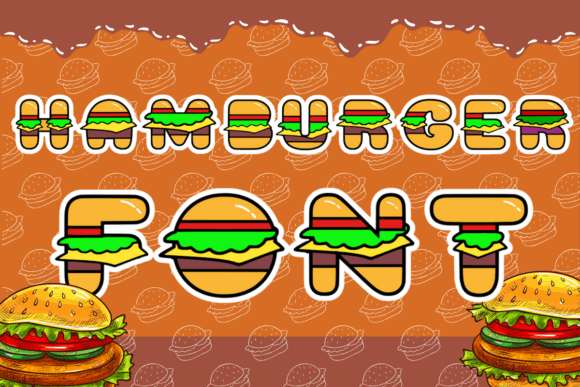
Hamburger is exactly what it sounds like: a fun, decorative display font where each letterform is meticulously crafted to resemble a delicious hamburger. Imagine the sturdy top and bottom buns forming the letter's baseline and cap height. In between, you'll find layers of textured patties, drips of melted cheese, crisp lettuce, and maybe even a sliver of tomato or onion. It's a typographic treat that's bursting with personality and instantly recognizable. This isn't a subtle serif font or a clean sans serif; it's a full-blown character font designed to be the star of the show.
When to Serve Up Hamburger
The real power of a typeface like Hamburger is knowing when and where to deploy it. Using it for the body text of a 300-page novel would be a disaster for readability. But using it for a headline on a restaurant menu? That’s a recipe for success. Its strength lies in short, high-impact applications where its intricate details can shine without overwhelming the viewer.
- Restaurant & Food Truck Branding: This is its home turf. Use Hamburger for your logo design, menu headers, signage, or packaging for a burger joint, diner, or food truck. It immediately communicates a fun, casual, and food-focused brand identity.
- Event Flyers & Social Media Graphics: Planning a backyard BBQ, a community cook-off, or a summer festival? Hamburger is perfect for creating eye-catching flyers, Instagram posts, and Facebook event headers that capture a festive, informal mood.
- Children's Materials: The playful nature of the letters makes it a fantastic choice for kids' party invitations, recipe cards for a fun cooking project, or educational materials about food.
- Novelty Apparel & Merchandise: Think about a t-shirt for a foodie, a fun apron, or stickers. Hamburger provides a unique graphic element that works well for merchandise where personality is the main selling point.
It's a premium font that shines in editorial design for a food magazine's feature headline, or in packaging design for artisanal burger sauces or snack foods. In web design, it could be a striking hero image font for a single, impactful line of text. The key is context. When your project's goal is to be fun, appetizing, and a little bit quirky, Hamburger is your go-to creative font.
Making the Most of Your Typographic Meal
Choosing a display font like Hamburger is just the first step. To use it effectively and maintain a professional look, you need to consider a few practical details. A great design asset is only as good as its implementation.
Pairing for Balance
Because Hamburger is so detailed and visually dominant, it demands a simple, clean partner. This is a fundamental principle of modern typography. Pair it with a straightforward sans serif font or a highly legible serif font for any body copy or supporting text. For example, a clean geometric sans serif like Montserrat or a classic serif like Lora can provide a stable, readable foundation that allows the headline set in Hamburger to pop without creating visual chaos. Avoid pairing it with other decorative, script, or handwritten fonts, as this will lead to a cluttered and confusing design.
Readability and Visual Hierarchy
Remember, Hamburger is a display font, meaning it's optimized for large sizes like headlines and logos, not for long paragraphs. At small sizes, the intricate "burger" details can blur together, making the text difficult to read. Always use it at a larger point size where its character is clear. By using Hamburger for your main headline and a simple, clean typeface for your subheadings and body text, you create a clear and effective visual hierarchy. This guides the reader's eye exactly where you want it to go, improving engagement and making your message more effective.
Evaluating Your License and Files
Before you download, always check the licensing. Is it a commercial font licensed for the specific use you have in mind (e.g., a logo for a client, merchandise for sale)? A reputable foundry will provide clear licensing information. Also, see what's included in the font package. Does it come with different styles or weights? Sometimes a decorative font will include a simpler "solid" version without the internal textures, which can offer more versatility. Checking these details ensures you're making a sound investment in your design assets and can use the font with confidence across all your projects.
Ultimately, Hamburger is a bold choice. It’s a font that doesn’t just speak—it shouts with joy. For the right brand or project, it can be the secret ingredient that makes your design memorable, engaging, and full of flavor. It’s a testament to how a strong typeface can define a brand identity and connect with an audience on a purely fun, visual level.